
In addition to my role as “Fiber Dan”—I am also responsible for overseeing our facility’s network infrastructure. This network manages crucial systems including the Building Management System (BMS), security measures, guest WiFi, office networking, and even the client’s gaming systems like PlayStation 5. Thanks to our low-latency fiber-optic network, real-time gaming experiences on titles like Fortnite and Call of Duty are significantly enhanced.
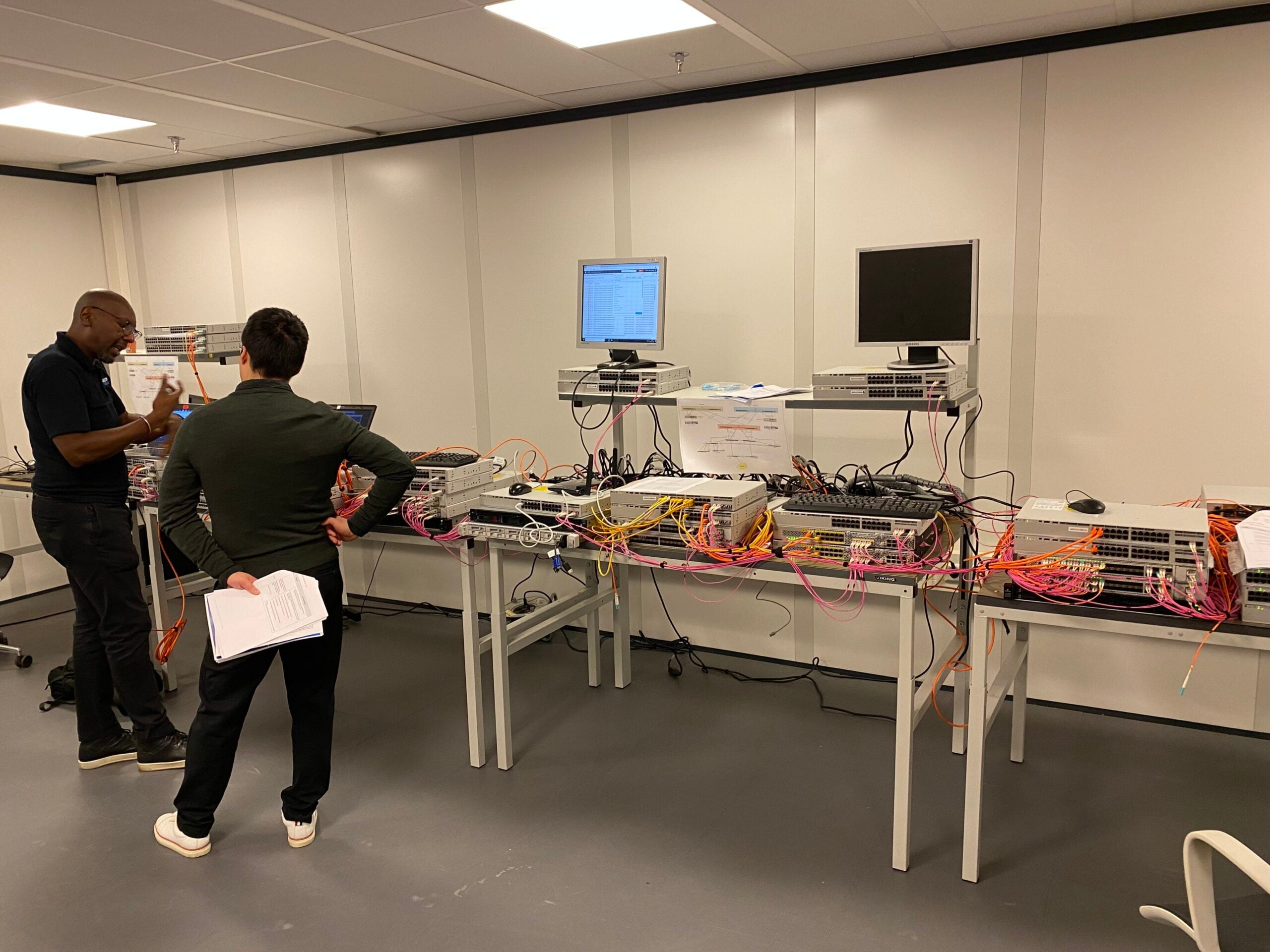
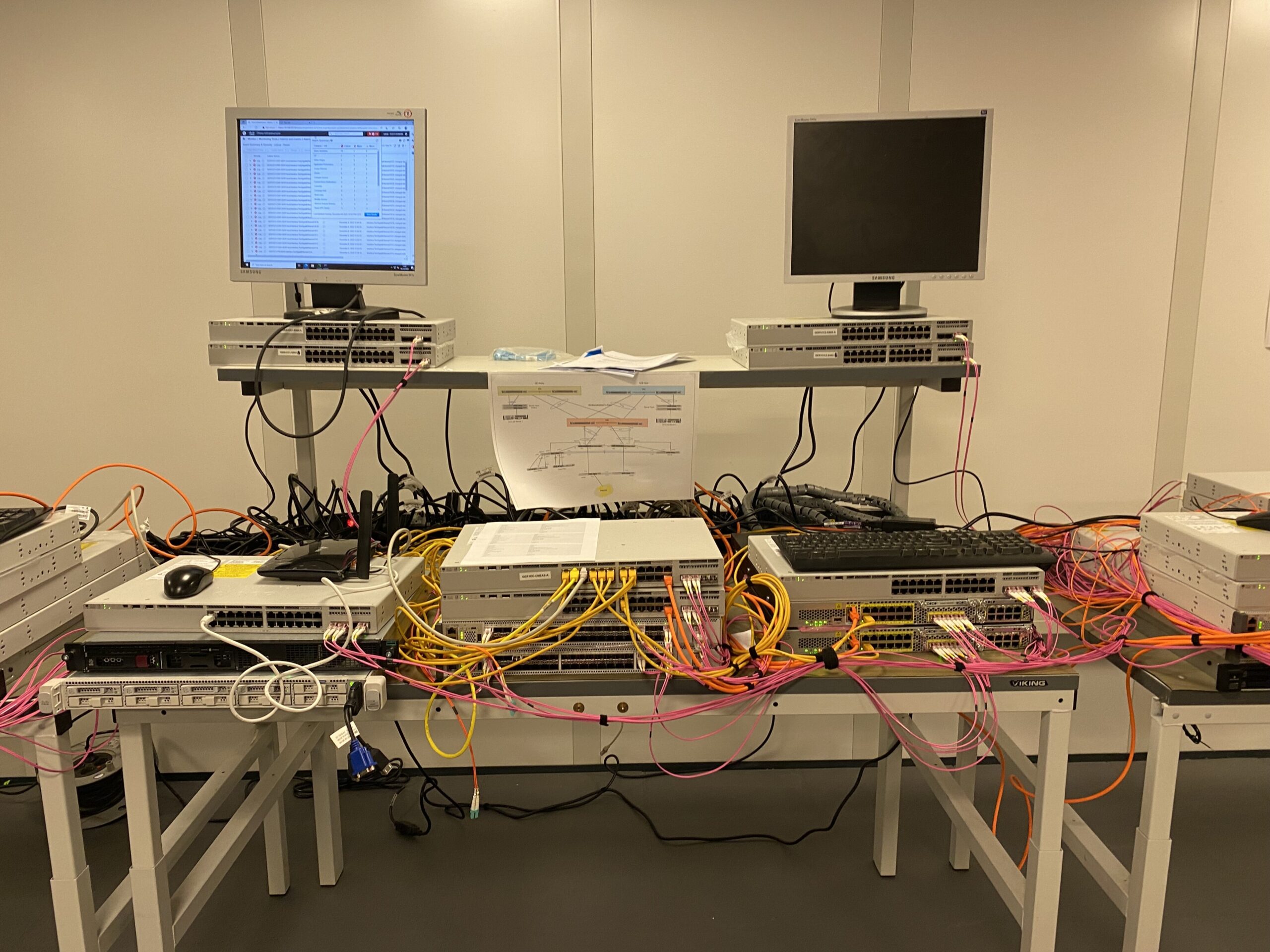
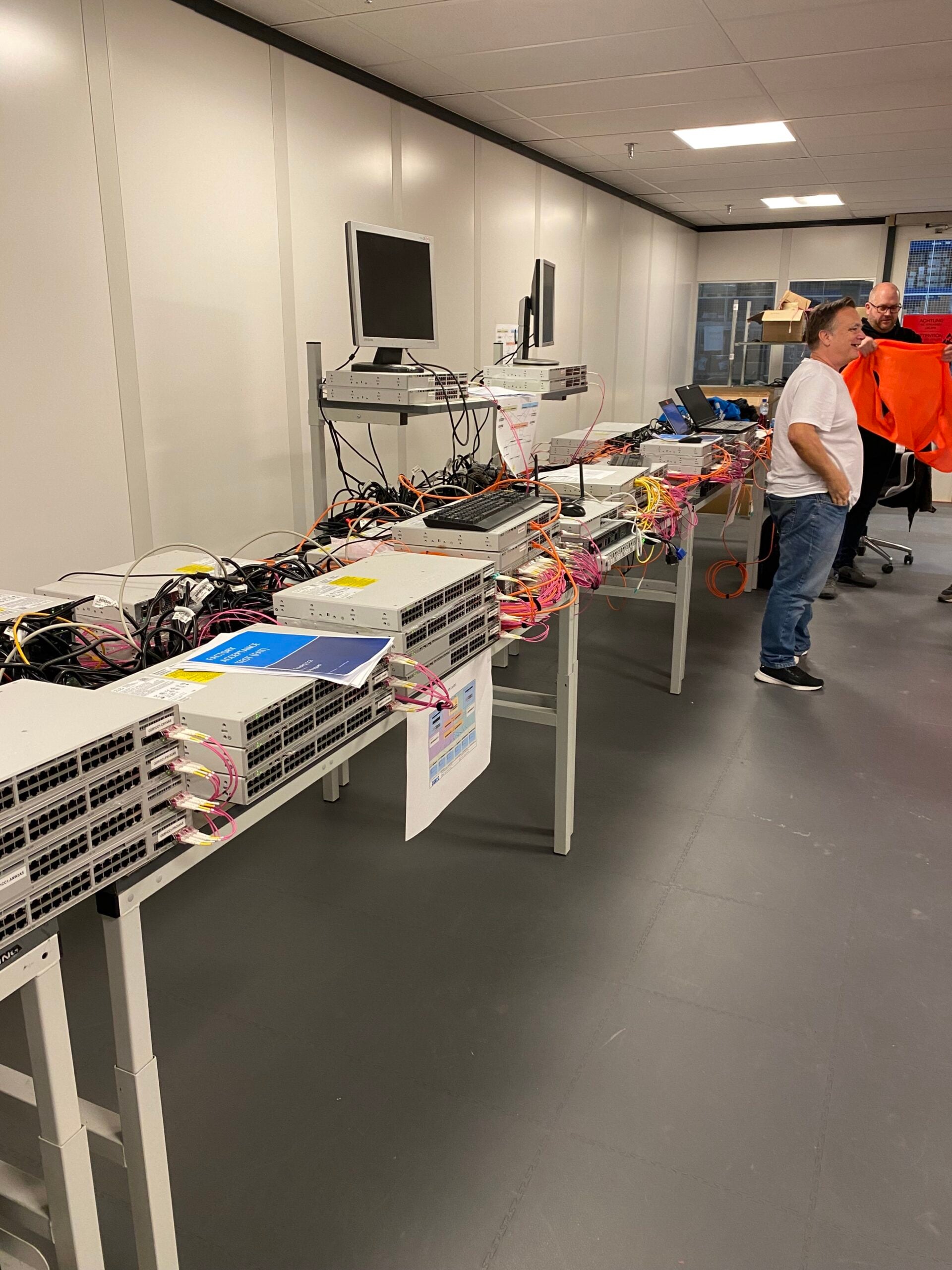
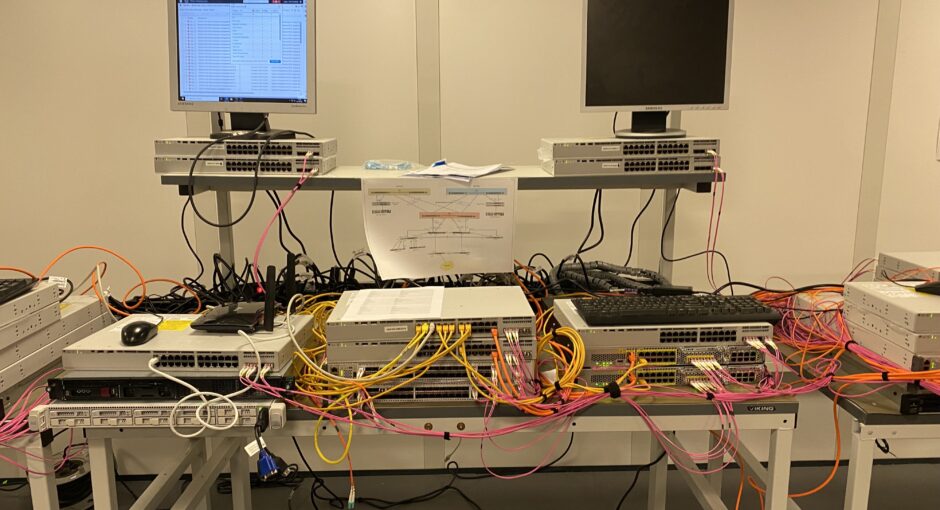
Before any network topology goes live in our data center, it undergoes rigorous testing in a controlled factory environment. I also conduct resilience tests, often referred to as “chaos monkey” scenarios, to validate the network’s reliability under unforeseen circumstances.
In terms of our network architecture, it diverges significantly from the basic setups commonly found in many data centers I’ve visited. Drawing from my past experience as a cloud service client, our facility network features active-active failover and offers full redundancy to each connected device. My preferred network design is what I call a “double star” topology, coupled with a fully meshed core network. While ring topologies have their advocates, my experience in 24/7 operational environments has shown that they are prone to failure and other issues. To mitigate potential risks, we’ve moved away from using VLANs and instead route every interface, thereby eliminating the possibility of catastrophic spanning-tree broadcast storms. Check out my other blog post where I unleash a broadcast storm on our CRAHs.