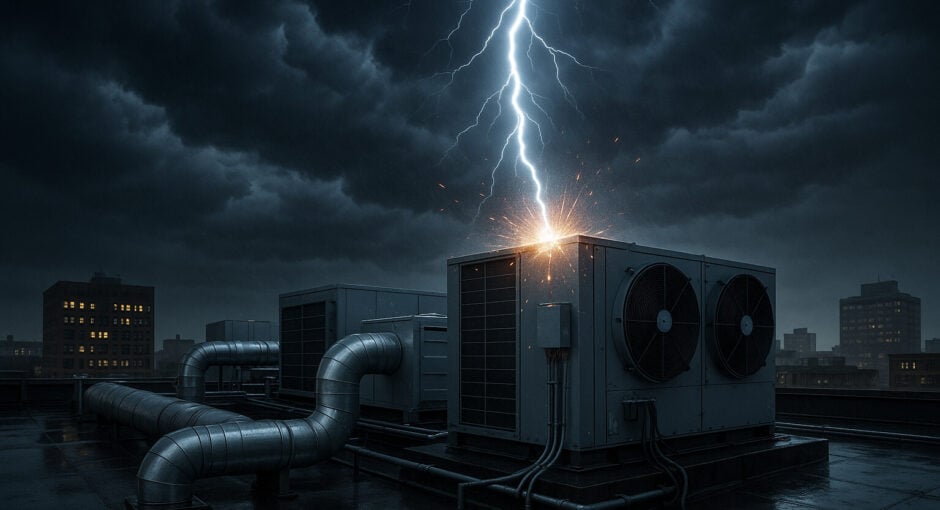

How a summer thunderstorm taught us the hard way about the hidden vulnerabilities in building automation systems
The Scene of the Crime
It started like any other Monday morning. Our monitoring system was lighting up like a Christmas tree with alerts: “ge-0/0/27 Down,” “ge-0/0/33 Flapping,” “Multiple Interface Failures.” What we initially dismissed as routine network hiccups quickly revealed themselves as something far more sinister.
Jun 15 04:59:51 lc1b-sw-dh206-01-1 mib2d[17222]: SNMP_TRAP_LINK_DOWN: ifIndex 562,
ifAdminStatus up(1), ifOperStatus down(2), ifName ge-0/0/27
Jun 15 04:59:52 lc1b-sw-dh206-01-1 rpd[17223]: RPD_IFL_NOTIFICATION: EVENT [UpDown]
ge-0/0/33.0 index 590 [Broadcast Multicast]
The logs told a story of chaos: ports 25 through 38 were experiencing widespread instability, with interfaces cycling up and down in rapid succession. What we were witnessing wasn’t a configuration error or a simple hardware failure—it was the aftermath of electromagnetic warfare waged by Mother Nature herself.
The Physics of Destruction
Understanding Lightning’s Electrical Assault
Lightning is essentially nature’s ultimate power surge. When a lightning bolt forms, it creates a stepped leader—a channel of ionized air—that moves from cloud to ground in a zigzag pattern. This leader carries a negative charge of approximately -50 coulombs at voltages reaching 100 million volts. When it nears the ground, positive streamers reach upward, creating a completed circuit that allows the main stroke to discharge.
The return stroke—what we actually see as lightning—travels upward at roughly one-third the speed of light, carrying currents of 20,000 to 200,000 amperes. To put this in perspective, your typical household circuit breaker trips at just 15-20 amperes.
Electromagnetic Pulse (EMP) Effects
But direct strikes aren’t the only threat. Lightning creates powerful electromagnetic pulses that can induce voltages in conductors miles away from the actual strike. This phenomenon, known as electromagnetic induction, follows Faraday’s Law:
ε = -N × (dΦ/dt)Where:
- ε = induced voltage
- N = number of wire turns (in our case, the cable length acts as a single-turn inductor)
- dΦ/dt = rate of change of magnetic flux
A lightning strike creates an extremely rapid change in magnetic flux (dΦ/dt), which can induce voltages of several thousand volts in nearby copper cables—more than enough to destroy sensitive semiconductor devices operating at 3.3V logic levels.
The Smoking Gun: Our Trane Controllers
After analyzing the failure pattern, the culprit became clear. Our building’s HVAC system consisted of multiple Trane rooftop units (RTUs) networked together via Ethernet for building automation control. Each RTU had its own dedicated Ethernet cable running back to a single network switch, with all the connections terminating on the same bank of switching ASICs.
Why HVAC Equipment is Lightning’s Favorite Target
Rooftop HVAC units are essentially lightning magnets for several reasons:
- Elevation: They’re often the highest metallic objects on a building
- Surface Area: Large metal housings provide excellent strike targets
- Grounding Issues: HVAC contractors rarely understand proper RF grounding techniques
- Poor Isolation: Ethernet connections create direct electrical paths to sensitive network equipment
The Trane Ethernet Epidemic
Trane’s building automation systems, like many modern HVAC controllers, rely heavily on IP networking for monitoring and control. While this provides excellent functionality for facilities management, it creates hidden vulnerabilities that traditional building lightning protection systems don’t address.
The problem is that electrical contractors install lightning protection for the building’s power systems, but HVAC contractors install the networking—and these two worlds rarely communicate about surge protection strategies. The result? A perfect storm of unprotected data pathways leading directly to your most expensive network infrastructure.
Our Network Architecture: The Good, The Bad, and The Ugly
The Good: Fiber-Based Security Cameras
Fortunately, we had made one smart decision early on. Our outdoor security camera network was implemented using fiber optic cables rather than copper Ethernet. This proved to be our saving grace—not a single camera was affected by the lightning event.
Fiber optic cables are immune to electromagnetic interference because they transmit data using light pulses rather than electrical signals. There’s literally no electrical connection between endpoints, making it impossible for lightning-induced surges to travel through the network infrastructure.
The Bad: Multiple Copper Pathways
Unfortunately, our HVAC network told a different story. Each Trane controller had its own dedicated Cat6 copper cable running from the rooftop down to our core switch. While this provided better network redundancy than a daisy-chain approach, it also created multiple electrical pathways for lightning energy to reach our network infrastructure. When lightning struck the rooftop equipment, energy could potentially enter through any (or all) of these connections simultaneously.
The Ugly: ASIC-Level Cascade Failure
When lightning energy entered our network through multiple HVAC uplinks, it didn’t just damage individual ports. The surge propagated through the switching fabric, causing concentrated damage to the specific Application Specific Integrated Circuit (ASIC) that handled ports 25-38—exactly where our Trane controllers were connected. This explains why we saw widespread instability across this entire port bank rather than isolated single-port failures.
The fact that multiple RTU cables terminated on the same switching ASIC created a vulnerability concentration. Instead of spreading the risk across different ASICs, we had inadvertently created a single point of failure where multiple lightning pathways converged on the same silicon.
However, on another network switch in the same vicinity used a different ASIC per RTU so the concentration os ASICs didn’t really matter.
The Forensic Evidence
Our investigation revealed telltale signs of lightning damage in the system logs:
Port Controller Failures
dc-pfe[16719]: dcbcm_drv_port_get_lipa_status: Port Duplex get failed
for port 4 error Operation failed
dc-pfe[16719]: dcbcm_port_lpinfo_get: Get link info failed for port 7
error Feature unavailable
These errors indicate that the port controllers—the specialized chips that manage individual Ethernet interfaces—had suffered physical damage. When semiconductor junctions are exposed to excessive voltage, they can develop what’s known as latch-up conditions or suffer permanent threshold voltage shifts.
Switching Fabric Instability
The logs showed extensive Spanning Tree Protocol (STP) recalculations and MAC address learning resets—clear indicators that the switching fabric was operating erratically. This suggests that the main switching ASIC had suffered partial damage, causing intermittent operation rather than complete failure.
The “Walking Wounded” Syndrome
Perhaps most concerning was the pattern of intermittent failures. Ports would come up, operate normally for minutes or hours, then suddenly fail again. This is characteristic of progressive degradation in semiconductor devices that have suffered electrical overstress. The damaged components continue to operate, but with reduced reliability and a high probability of eventual complete failure.
The Hidden Costs of Lightning
Direct Equipment Replacement
Our immediate costs included:
- Core network switch: $15,000
- Associated downtime and labor: $5,000
- Total direct costs: $20,000
Indirect Business Impact
But the real costs went beyond hardware replacement:
- Building automation downtime: HVAC monitoring and control offline for 24 hours
- Security system disruption: Loss of monitoring capabilities
- Productivity losses: IT staff diverted to emergency response
- Future vulnerability: Remaining equipment operating in degraded state
Insurance Complications
Many organizations discover too late that their property insurance policies have specific exclusions for data networking equipment, or require separate riders for full coverage. The distinction between “building systems” and “data equipment” can lead to unexpected coverage gaps.
Lessons Learned: Building a Lightning-Resilient Network
The Layered Defense Strategy
Protecting against lightning requires a multi-layered approach that addresses both direct strikes and induced surges:
Layer 1: Building-Level Protection
- Lightning rods and air terminals for direct strike protection
- Whole-building surge protection at electrical service entrance
- Proper grounding and bonding of all metallic building systems
Layer 2: Network Entry Point Protection
- Ethernet surge protectors at building cable entry points
- Fiber optic isolation for critical outdoor connections
- Separate grounding systems for telecom equipment
Layer 3: Equipment-Level Protection
- UPS systems with integrated surge protection
- Individual port protection for critical network devices
- Isolation transformers for sensitive equipment
The Fiber Solution
For new installations, fiber optic cabling provides the ultimate protection against lightning-induced surges. Key advantages include:
- Complete electrical isolation between endpoints
- Immunity to electromagnetic interference
- No ground loop formation
- Future-proof bandwidth capabilities
HVAC-Specific Recommendations
When dealing with rooftop HVAC controllers like our Trane units, consider these strategies:
Immediate Solutions
- Install Ethernet surge protectors at building entry points for HVAC networks
- Implement dedicated grounding for rooftop equipment
- Use shielded cabling with proper grounding techniques
Long-term Solutions
- Fiber conversion: Install fiber optic links between building and rooftop equipment
- Wireless bridging: Use point-to-point wireless links to eliminate copper connections
- Edge computing: Place network equipment in hardened rooftop enclosures with local protection
The Trane Challenge: When HVAC Meets IT
Protocol Complexity
Modern building automation systems like Trane’s use sophisticated protocols such as BACnet/IP that require full TCP/IP networking capabilities. This isn’t just simple serial communication—these systems need robust, high-bandwidth connections for real-time monitoring and control.
Integration Nightmares
The challenge lies in integrating robust IT infrastructure with mechanical systems designed by different disciplines. HVAC engineers focus on thermal dynamics and mechanical reliability, while network engineers worry about electrical isolation and surge protection. These two worlds rarely intersect until something goes catastrophically wrong.
Vendor Coordination
Trane, like most HVAC manufacturers, provides excellent mechanical and controls support but often lacks deep expertise in network infrastructure protection. This creates a gap where neither the HVAC contractor nor the IT team takes full responsibility for surge protection on building automation networks.
Future-Proofing Against Nature’s Fury
Emerging Technologies
Several new technologies are making lightning protection more effective:
Smart Surge Protectors: Modern devices can communicate their status, provide remote monitoring, and even predict when replacement is needed.
Hybrid Fiber-Copper Solutions: Some manufacturers now offer converters that allow legacy copper-based devices to connect via fiber, providing lightning isolation without equipment replacement.
Software-Defined Networking (SDN): Advanced network architectures can automatically isolate damaged segments and reroute traffic, minimizing the impact of lightning-related failures.
The Economics of Prevention
While surge protection devices represent an upfront investment, the math is compelling:
- Ethernet surge protector: $200-500 per connection
- Fiber conversion kit: $1,000-2,000 per building
- Complete network switch replacement: $15,000-50,000
Return on investment: Even a small probability of lightning damage makes protection economically justified.
The Human Element
Training and Awareness
Perhaps the most important lesson is the need for cross-disciplinary communication. Electrical contractors, HVAC technicians, and IT professionals must work together to identify and address lightning vulnerabilities.
Documentation and Planning
Every organization should maintain updated documentation showing:
- All external cable pathways
- Grounding and bonding connections
- Surge protection device locations and specifications
- Emergency response procedures for lightning events
Conclusion: Respect the Storm
Our lightning encounter served as an expensive but valuable education in the hidden vulnerabilities of modern building systems. As we’ve integrated more sophisticated networking into every aspect of our infrastructure—from HVAC to security to access control—we’ve inadvertently created new pathways for nature’s electrical fury to reach our most sensitive equipment.
The solution isn’t to abandon these technologies but to implement them thoughtfully, with proper protection strategies that account for both direct and indirect lightning effects. Whether it’s choosing fiber over copper for outdoor connections, installing appropriate surge protection devices, or simply ensuring that HVAC and IT teams coordinate their efforts, small investments in protection can prevent catastrophic failures.
As climate change brings more frequent and severe thunderstorms to many regions, lightning protection isn’t just good engineering practice—it’s essential business continuity planning. The next time you hear thunder rumbling in the distance, you’ll know that somewhere, a network engineer is holding their breath and hoping their surge protectors are up to the challenge.
Because when lightning strikes, it’s not just about replacing hardware—it’s about learning to coexist with one of nature’s most powerful and unpredictable forces.
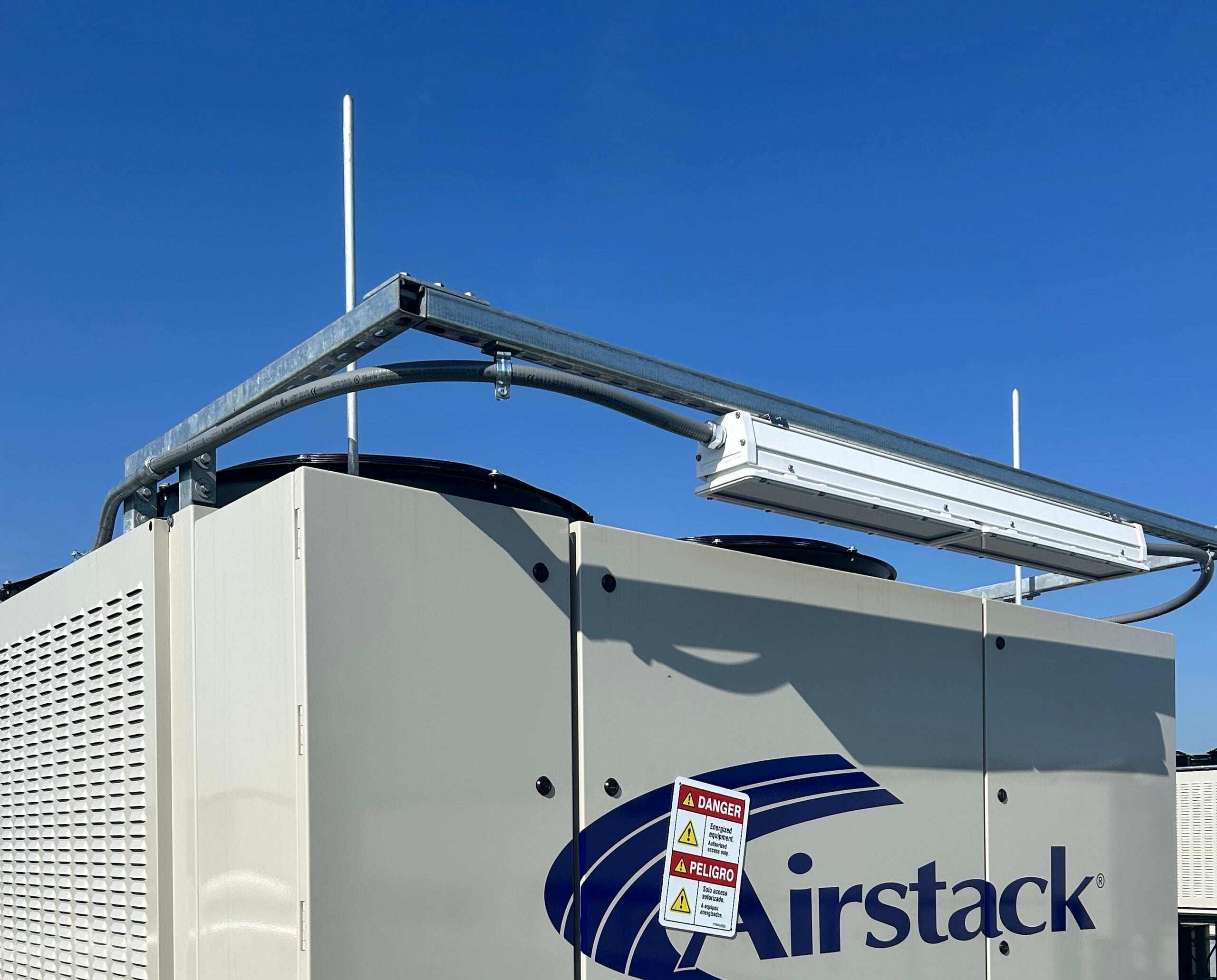
UPDATE: Spot the problem?
Just an educated guess, but the lightning protection sits adjacent to the communications controller.




Social Profiles