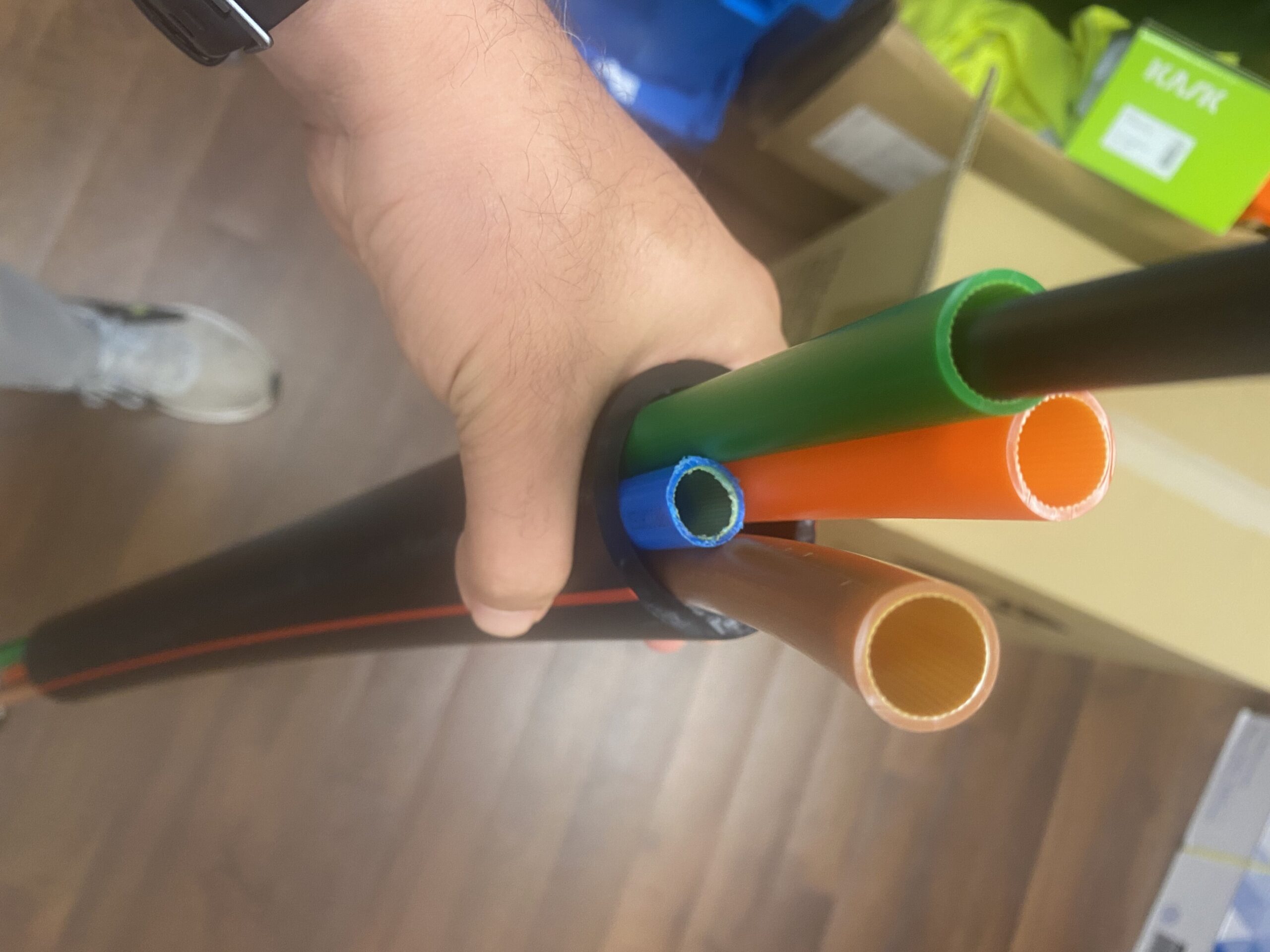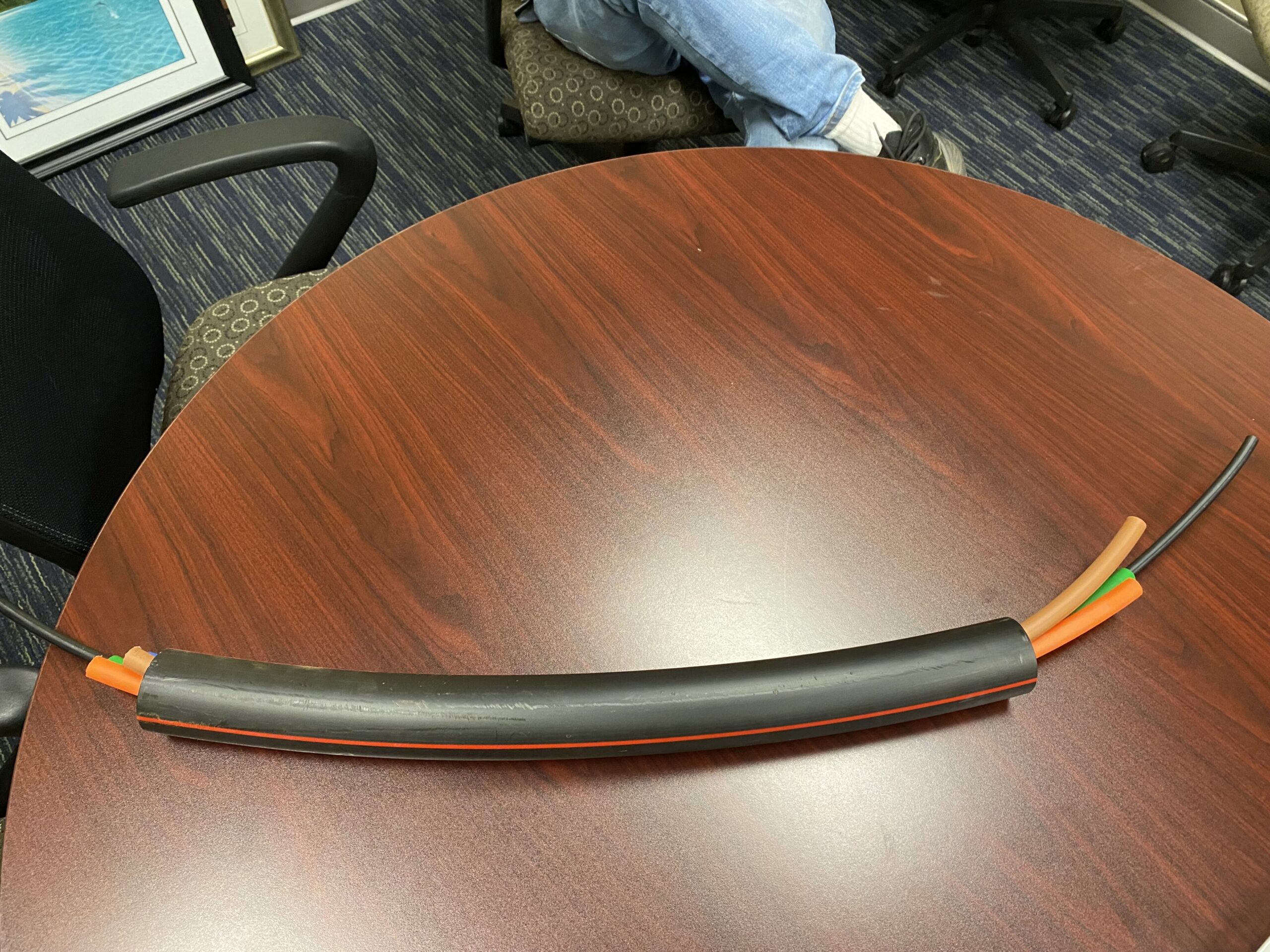

I remain uncertain whether the growing popularity of microduct is a temporary fad or indicative of a lasting trend in the industry. Microduct offers a few notable advantages, including a reduced physical footprint and quicker installation times. However, I haven’t yet formed a conclusive opinion on its effectiveness when compared to traditional high-count cables.
Proponents claim that microduct simplifies splicing and makes it easier to route cables to multiple rooms, eliminating the need for transitions in the Point of Entry (POE). On the downside, microduct presents some challenges in service chambers, requiring larger service loops to accommodate air-blown fiber.
In terms of capacity, each duct within a microduct system can house a 432-strand fiber optic cable. I’ve also heard that an 864-strand variant is in development. This means you could essentially fit up to 1728 strands in a 2-inch (50mm) conduit. However, it’s worth noting that traditional high-count cables can offer similar capacities, such as a 3456-strand cable also fitting within a 2-inch (50mm) conduit. Ultimately, the best choice will depend on your specific requirements and use case.