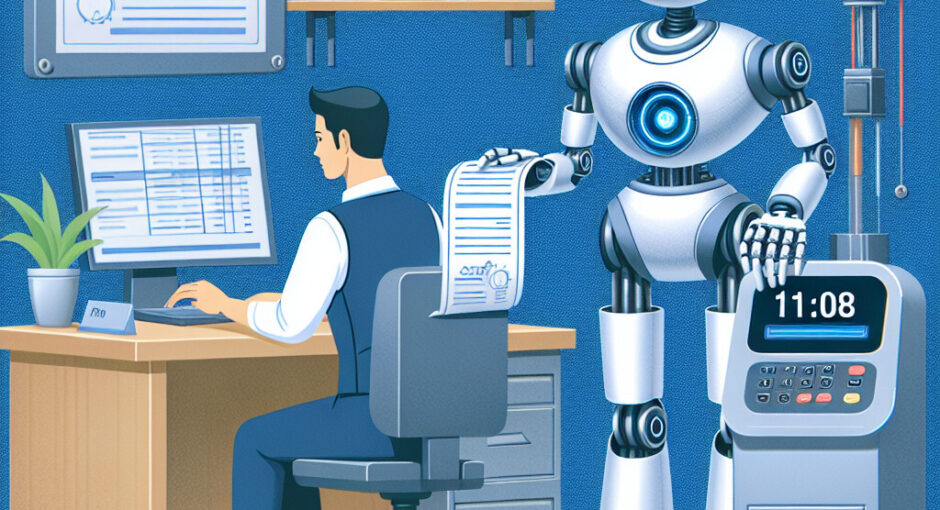

I still remember the day my friend told me about his bizarre experience at Wal-Mart. He had been late to work his third time in the course of seven years, because he got a flat tire on his car. But what happened next was something neither of us could have anticipated.
On his third tardy arrival, he made his way to the clock-in station, expecting perhaps a warning or a discussion with his manager about his punctuality. Instead, as he swiped his card to clock in, the computer screen flashed a message that would change everything: “Employee Terminated.” Alongside this stark notification, the machine proceeded to print out his final paycheck.
My friend was stunned. The abruptness and impersonal nature of his termination left him reeling. This wasn’t just about being late; it was about the sudden realization that technology had become a key decision-maker in his employment journey. The story of my friend’s unexpected firing at Wal-Mart highlights the significant impact of technological advancements on the workplace, especially when it comes to management and employee relations.
Managers Resistant to AI
While my friend had zero interaction with a human, most likely that robot (computer) replaced the middle manager and arguably human resources. The rise of AI is quietly reshaping the landscape of middle management, impacting roles traditionally focused on overseeing teams, generating reports, and connecting executives with employees. As AI increasingly automates tasks like data analysis and reporting, these routine functions are at risk, potentially leading to flatter organizational structures and fewer management layers.
This vulnerability is underscored by industry predictions: Gartner forecasts a potential halving of middle management roles in 20% of companies by 2026, Forrester highlights AI’s impact on coordinators and other office workers, and Pega reports that 78% of executives anticipate AI-driven reductions in middle management ranks.
This looming shift has understandably created anxiety, with surveys showing 43% of UK CEOs feeling their own jobs are at risk, and 45% of managers discreetly using AI tools. Some managers are responding by actively championing AI adoption, demonstrating its value as a way to maintain relevance while others are flat out resisting and stying others.
The AI revolution is impacting jobs, but it’s not the frontline workers who are most affected—it’s the middle managers!
Contrary to popular belief, the advent of Artificial Intelligence (AI) is not primarily displacing frontline workers, but rather transforming the role of middle management. As AI assumes more routine and administrative tasks, it is middle managers who are most likely to see their job descriptions change or even become obsolete.
To navigate this evolving landscape, middle managers must prioritize upskilling, focusing on strategic thinking and leadership development. Embracing change and fostering a culture of continuous improvement is also crucial. Instead of resisting AI, managers should leverage it as a tool to enhance decision-making and drive innovation.
The Rise of AI in Management
While AI promises increased efficiency, organizations must remember the irreplaceable value of human leadership qualities like creativity, morale-building, and complex problem-solving. The ideal future likely involves a synergy of AI and human intelligence, where adaptable, strategically-minded managers use technology to amplify their impact. Ultimately, the future of middle management hinges on embracing change, acquiring new skills, and strategically integrating AI into the evolving workplace.
Embracing Change
My friend’s story at Wal-Mart might seem like an isolated incident, but it reflects a broader trend. Technology is changing how we work and interact with our workplaces. For middle managers, this means embracing continuous learning, staying updated on the latest technologies, and fostering a growth mindset within their teams.
As we move forward in this technological landscape, it’s clear that the role of the middle manager will evolve significantly. By focusing on developing the right skills and embracing the opportunities presented by AI, managers can not only navigate these changes but also thrive in their roles, leading their teams to success in an increasingly automated world.
The future of work is undoubtedly intertwined with technology, and while my friend’s experience might have been a shock, it serves as a reminder that adaptability and resilience are key to thriving in this new era. Whether you’re a manager looking to upskill or simply someone interested in the evolving workplace, one thing is certain: the ability to embrace change and learn from unexpected experiences will be invaluable moving forward.





Social Profiles