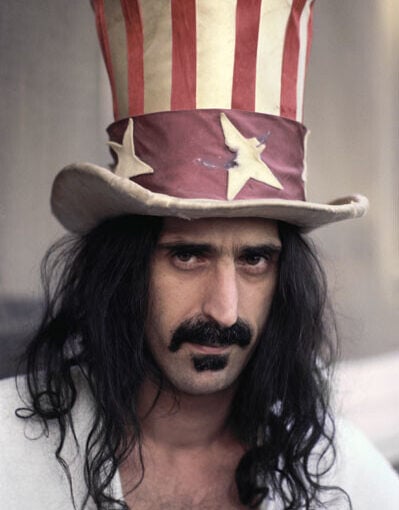

Frank Zappa’s whimsical 1992 presidential “campaign” offers a unique lens through which to view today’s political landscape. In an era dominated by unconventional leaders and innovative governmental initiatives, comparing Zappa’s satirical bid to the modern Department of Government Efficiency (DOGE) led by Elon Musk reveals intriguing parallels and contrasts. This essay explores how Zappa’s artistic provocation and DOGE’s technological ambitions reflect evolving approaches to political commentary and reform.
Frank Zappa’s 1992 candidacy was primarily an artistic statement. He used his campaign to highlight issues like censorship and freedom of expression. Zappa’s proposals, though exaggerated, underscored his critique of political inefficiency. Similarly, DOGE aims to streamline government operations and reduce spending. However, DOGE employs modern technology rather than satire to address bureaucratic challenges. Both initiatives seek to reform government, albeit through vastly different methods.
DOGE’s focus on reducing federal spending mirrors Zappa’s call for abolishing the income tax. By advocating a consumption-based tax system, Zappa promoted fairness and transparency. DOGE, led by Musk, leverages blockchain and AI to modernize tax collection processes. While Zappa’s approach was rooted in economic philosophy, DOGE’s strategy is driven by technological innovation. Both aim to create a more efficient financial system, yet their tools and motivations diverge significantly.
The emphasis on education distinguishes Zappa’s campaign from DOGE’s technological initiatives. Zappa advocated for comprehensive music education to foster creativity and critical thinking in students. He believed that integrating the arts into education would cultivate a more innovative society. In contrast, DOGE prioritizes modernizing government technology to enhance productivity. While Zappa focused on cultural enrichment, DOGE is dedicated to operational efficiency. This contrast highlights the differing values of artistic expression versus technological advancement in shaping future policies.
Freedom of expression is another area where Zappa’s and DOGE’s approaches differ yet intersect. Zappa vehemently opposed censorship, championing unfiltered artistic and personal expression. His stance was a direct challenge to restrictive societal norms and political constraints. DOGE, under Musk’s leadership, seeks to deregulate digital platforms to promote open discourse online. Although both advocate for increased freedom, Zappa approached it from an artistic perspective, whereas DOGE targets technological and administrative freedoms. This intersection underscores the evolving nature of freedom in both cultural and digital realms.
In comparing Zappa’s 1992 campaign to the modern political landscape featuring DOGE, it becomes evident that both initiatives reflect a desire for reform through distinct avenues. Zappa’s satirical approach served as a cultural critique, while DOGE’s technological focus aims for concrete governmental improvements. Despite their differences, both highlight the ongoing struggle to balance efficiency, freedom, and innovation within the political sphere.
Looking ahead, one can only imagine Frank Zappa and Elon Musk co-hosting a government efficiency concert, where policy proposals are performed on electric guitars and blockchain beats. Such a collaboration would certainly keep the political stage as unpredictable and entertaining as ever.






Social Profiles