
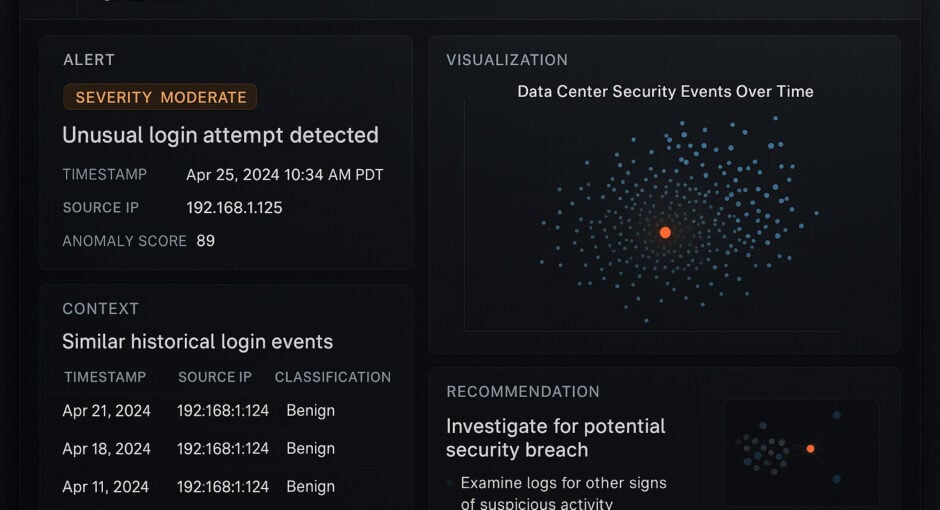

SAD AI – A machine learning-based system for detecting anomalies in syslog data using a combination of K-Means clustering and InfoNCE contrastive learning.
The Challenge: Finding Needles in the Haystack
In today’s complex IT environments, system logs are generated at an overwhelming rate. A typical enterprise data center can produce millions of syslog messages daily, creating a digital haystack where critical anomalies—indicators of security breaches, system failures, or performance issues—hide like needles.
Our operations team faced this exact challenge. They were drowning in routine logs while potentially missing critical events that required immediate attention. Manual review was impossible, and traditional rule-based filtering couldn’t adapt to evolving system behaviors or detect subtle anomalies.
“The information was out there but we were unable to see the forest through the trees! We needed a better tool.” — Dan Molloy, SVP Design & Technology Infrastructure
This is where SAD AI (Syslog Anomaly Detection AI) was born—an intelligent solution that leverages the power of machine learning to automatically identify unusual patterns in syslog data without requiring predefined rules.
The Power of Adaptive Learning
What sets SAD AI apart from traditional solutions is its ability to learn what “normal” looks like for your specific environment, then identify deviations without human programming. The system becomes more intelligent over time as it processes more data.
Core Technology: How SAD AI Works
SAD AI combines multiple sophisticated machine learning techniques to achieve robust anomaly detection:
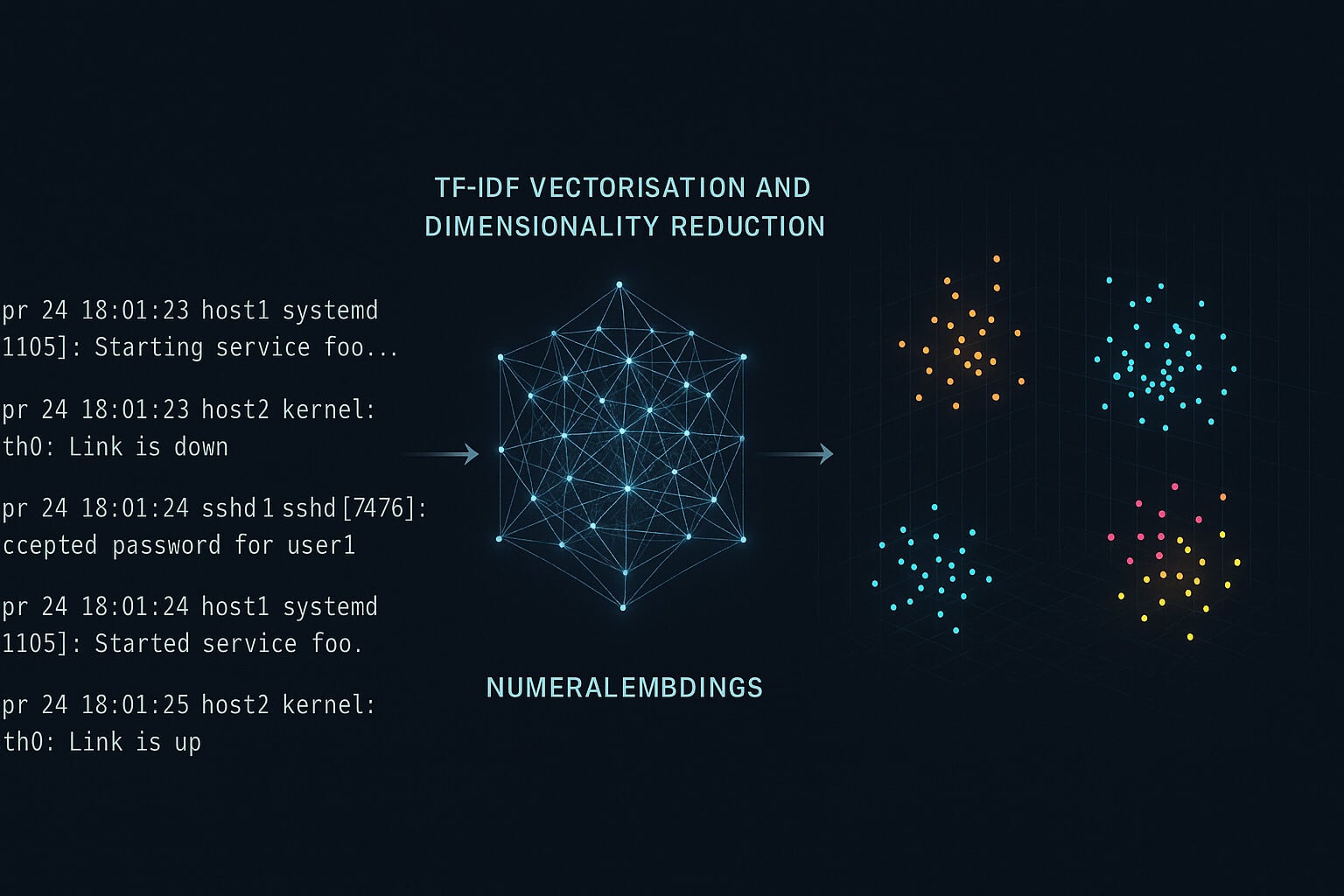
1. Event Preprocessing and Embedding
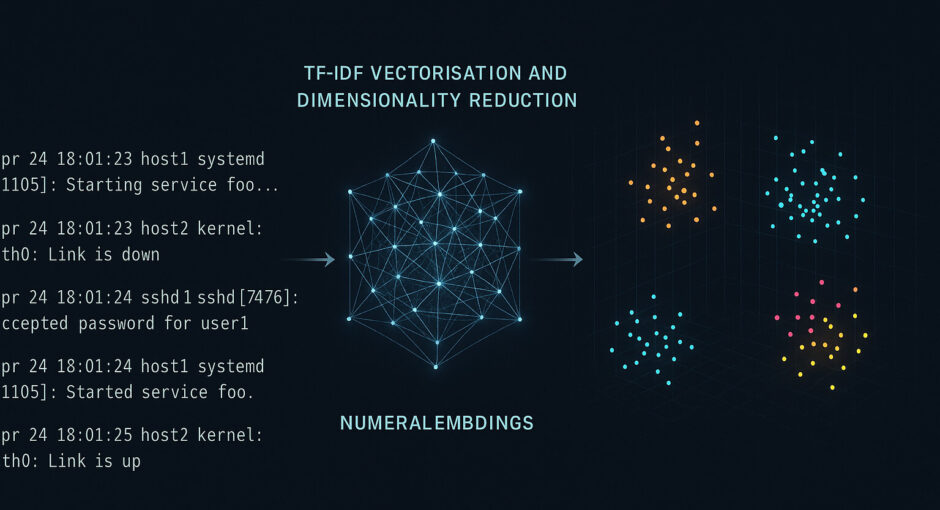
First, the system transforms raw syslog messages into numerical vectors (embeddings) that capture their semantic meaning. This process uses:
- TF-IDF Vectorization: Converts text into numerical features while accounting for term importance
- Dimensionality Reduction: Compresses these vectors to focus on the most important patterns
2. Multi-Model Anomaly Detection
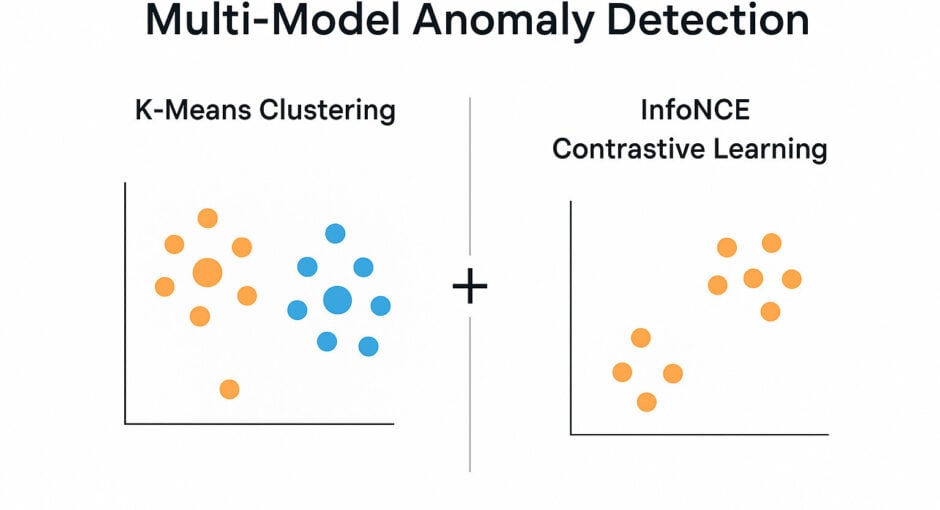
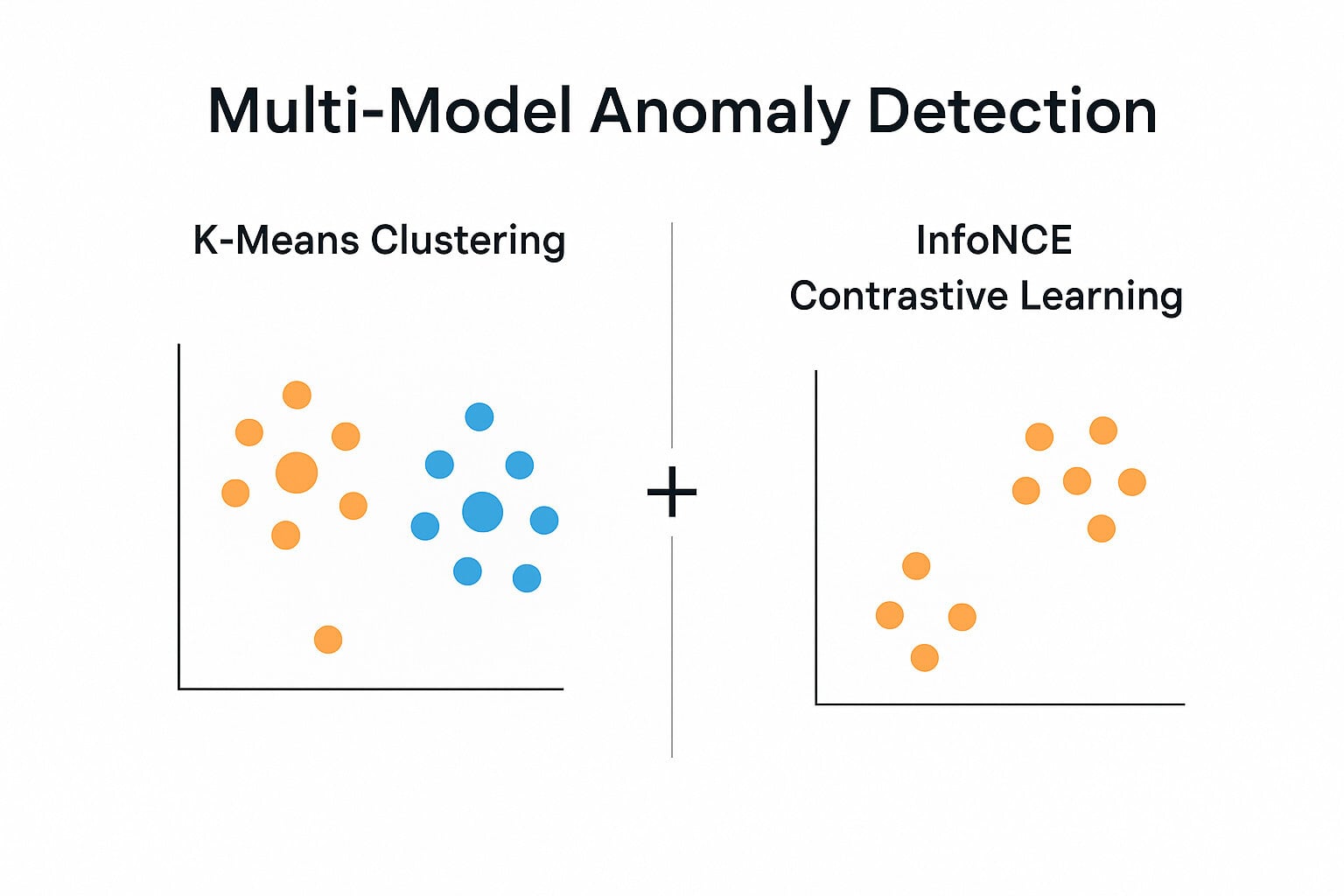
SAD AI uses two complementary detection methods that work in tandem:
- K-Means Clustering: Groups similar events into clusters, establishing baseline patterns of normal system behavior. Events that fall far from cluster centers are flagged as potential anomalies.
- InfoNCE Contrastive Learning: This cutting-edge technique learns to differentiate between similar and dissimilar events, creating a similarity space where outliers become easily detectable.
The combination of these approaches provides robust detection with fewer false positives than single-model systems.
3. Reinforcement Learning for Optimal Sensitivity
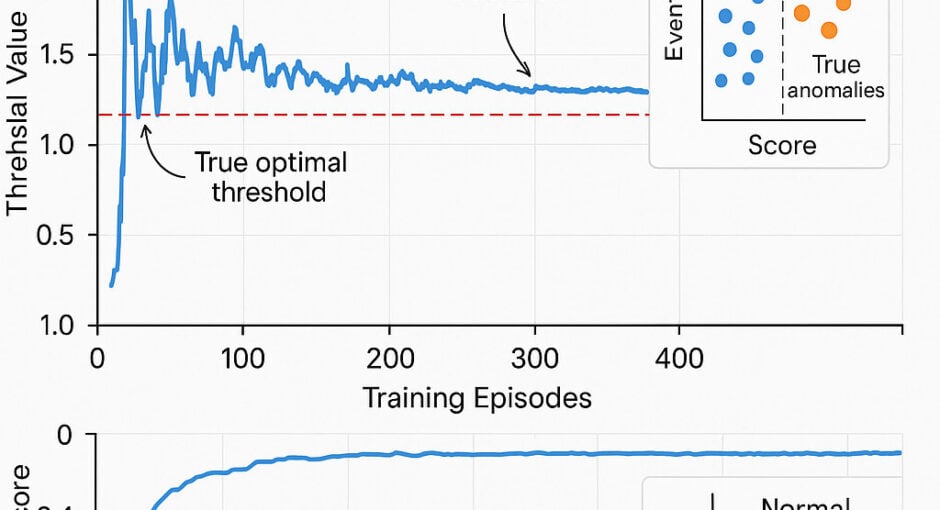
One of the most innovative aspects of SAD AI is its ability to automatically optimize its detection threshold using reinforcement learning:
- The system starts with a reasonable threshold and observes the results
- It receives feedback (either automated or from operators) on detection accuracy
- The RL algorithm adjusts the threshold to maximize true positives while minimizing false alarms
- Over time, the system learns the optimal threshold for your specific environment
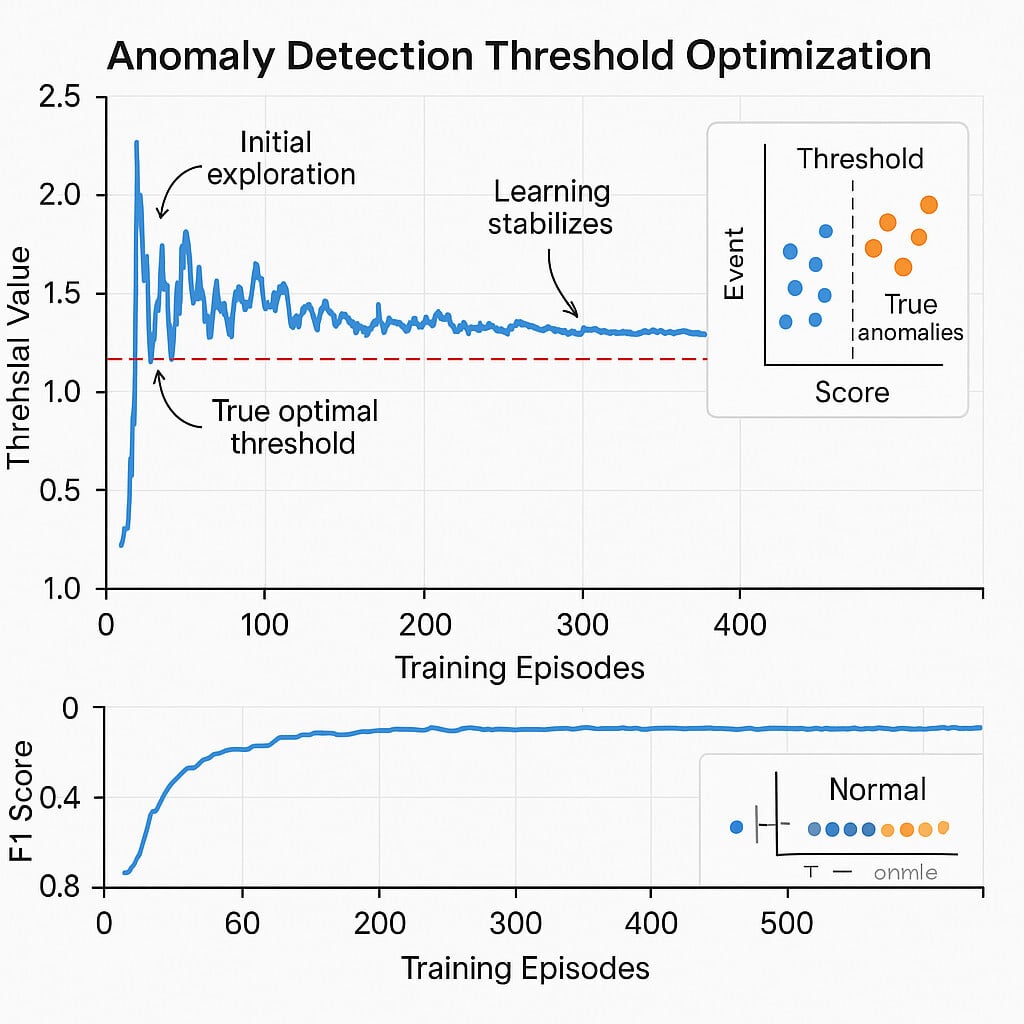
This self-tuning capability eliminates the need for manual threshold adjustment and allows the system to adapt to changing environments.
SAD AI in Action: Real-World Use Cases
Let’s look at how SAD AI performs in actual production environments:
Case Study 1: Security Breach Detection
A financial services client deployed SAD AI to monitor their authentication logs. Within the first week, the system identified an unusual pattern of successful logins from an IP address that had never appeared before, occurring at 2:00 AM when no staff were typically working.
The security team investigated and discovered an unauthorized access attempt using compromised credentials. Because SAD AI detected this anomaly early, the breach was contained before any sensitive data was accessed.
Case Study 2: Infrastructure Failure Prediction
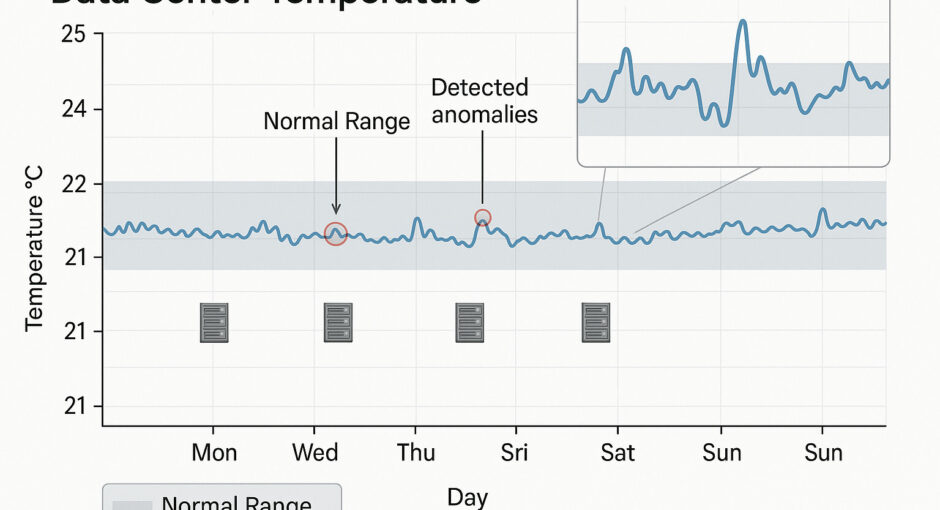
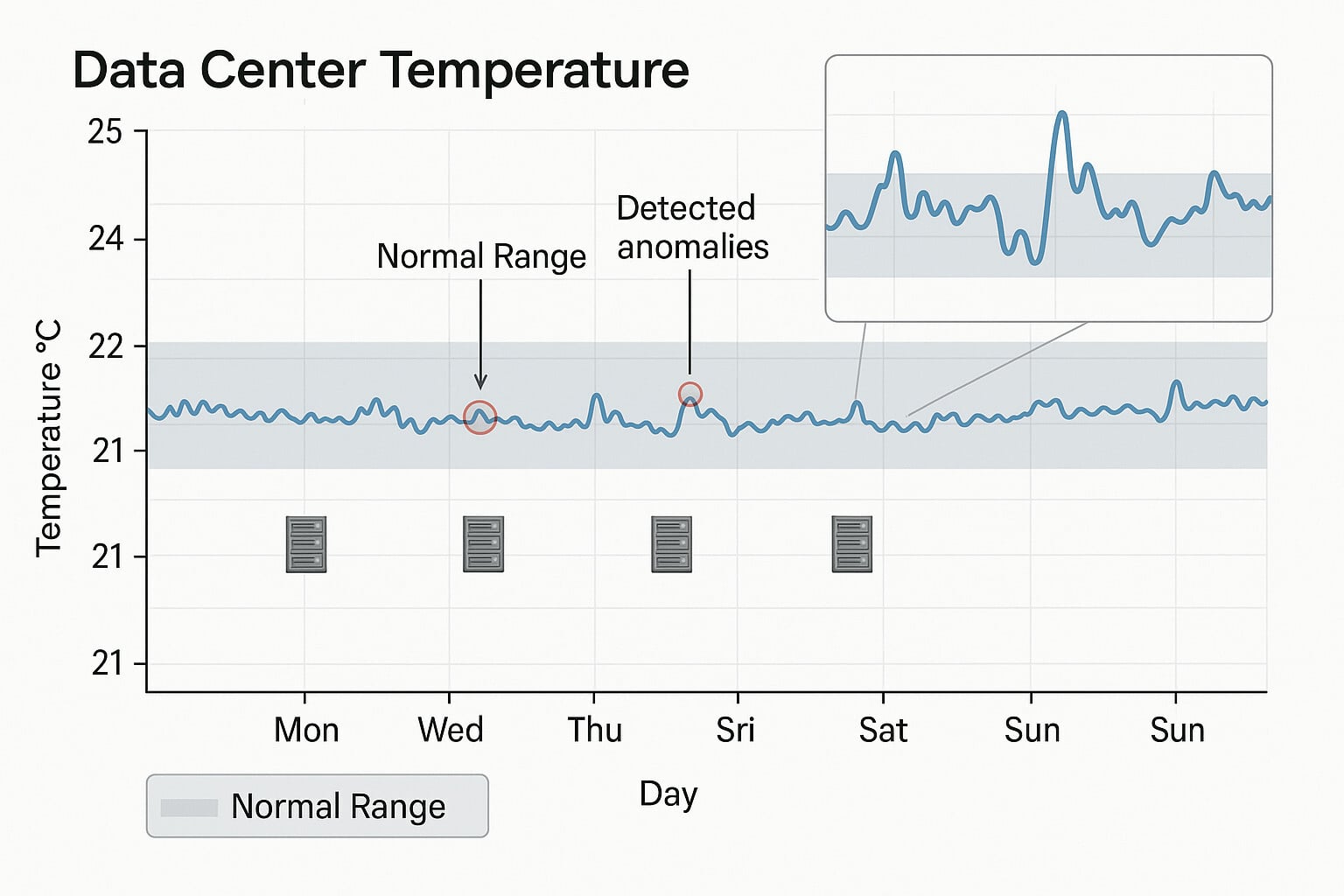
A cloud service provider integrated SAD AI into their infrastructure monitoring. The system began detecting subtle anomalies in temperature sensor logs from one of their data centers—variations too small to trigger traditional threshold alerts but consistently unusual compared to historical patterns.
Investigation revealed a failing cooling unit that would have caused a major outage within days. Preventive maintenance was scheduled, avoiding an estimated $200,000 in downtime costs.
Case Study 3: Performance Troubleshooting
An e-commerce platform experienced intermittent performance issues that were difficult to diagnose. After deploying SAD AI, the system identified anomalous patterns in database connection logs that preceded each slowdown.
The unusual log patterns revealed a connection pool exhaustion issue during specific API calls. Once fixed, the platform’s performance stabilized, leading to improved customer satisfaction and increased sales.
How SAD AI Alerts Work
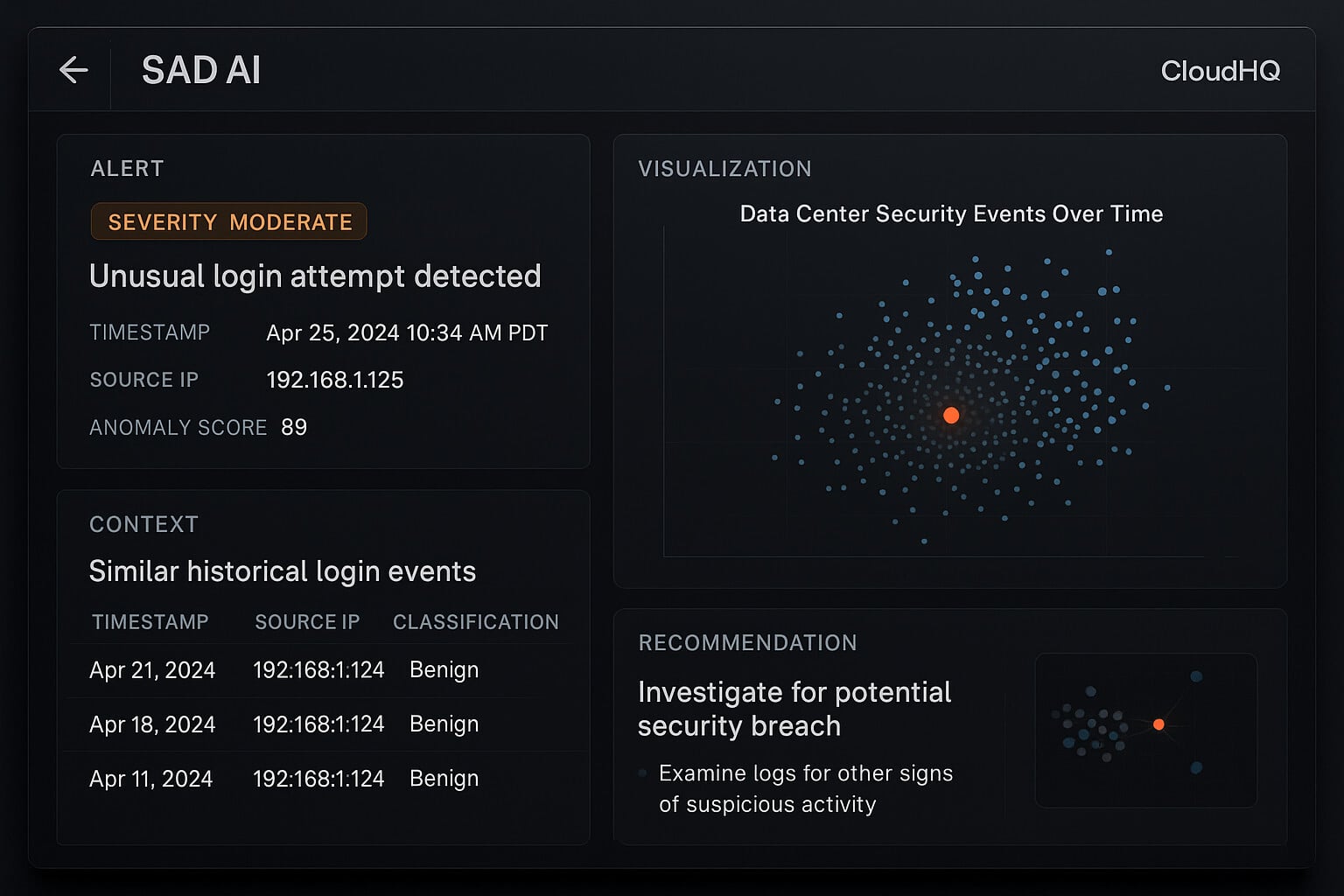
When SAD AI detects an anomaly, it doesn’t just flag it—it provides context that helps technicians understand and respond appropriately:
- Immediate Notification: Alerts are sent via email, webhook (Slack, Teams, etc.), or integrated into existing monitoring systems
- Contextual Information: Each alert includes the anomalous event, its anomaly score, and similar historical events for comparison
- Cluster Analysis: The system shows how the event differs from established patterns
- Suggested Investigation Steps: Based on the type of anomaly, SAD AI recommends next actions
Continuous Learning and Improvement
SAD AI doesn’t remain static—it evolves with your environment. The system:
- Continuously refines its understanding of normal patterns
- Adapts to deliberate system changes without generating false positives
- Improves threshold settings through reinforcement learning
- Prunes outdated patterns to remain memory-efficient
Performance visualization tools allow administrators to monitor the system’s learning progress and effectiveness over time.
Beyond Logs: The Future of Intelligent Operations
While SAD AI currently focuses on syslog data, the technology has broad applications across IT operations:
Network Traffic Analysis
The same techniques can identify unusual traffic patterns that might indicate DDoS attacks, data exfiltration, or misconfigured services.
Application Performance Monitoring
Applied to application metrics, this approach can detect subtle performance degradations before they impact users.
IoT and Edge Computing
As computing moves to the edge, autonomous anomaly detection becomes crucial for managing distributed systems where human monitoring is impractical.
AI as an Ally, Not a Replacement
It’s important to note that SAD AI is designed to augment human expertise, not replace it. The system handles the overwhelming volume of routine data, allowing skilled technicians to focus on investigating genuinely suspicious events.
This human-AI partnership creates a feedback loop that improves both:
- The AI becomes more accurate through human feedback
- Technicians gain insights from patterns the AI discovers
Getting Started with SAD AI
Implementing SAD AI in your environment is straightforward:
- Connect to your Graylog (or other syslog server) API
- Configure basic parameters like alert recipients
- Let the system run and learn your normal patterns
- Review and provide feedback on initial alerts
- Watch as detection accuracy improves over time
The system is designed to work “out of the box” with minimal configuration, automatically adapting to your specific environment.
Try It Yourself!
We’ve open-sourced the SAD AI project so you can experience its capabilities in your own environment. Check out our GitHub repository and start detecting anomalies today:
https://github.com/djbakerman/sadai
The repository includes detailed installation instructions, configuration guides, and examples to help you get started quickly.
Looking Forward: The Future of Intelligent Operations
As we look to the future, we see tremendous potential for expanding this technology. Machine learning approaches like those used in SAD AI can be applied to virtually any operational data stream—from traditional IT infrastructure to industrial systems, smart buildings, and beyond.
The next frontier involves cross-domain anomaly detection, where patterns across multiple systems are analyzed together to identify complex issues that would be invisible when looking at any single data source.
We’re also exploring predictive capabilities that not only detect anomalies but forecast them before they occur, enabling truly proactive operations.
SAD AI represents a fundamental shift in how we approach system monitoring—from reactive rule-based alerts to proactive, self-learning intelligence. By embracing this approach, operations teams can simultaneously reduce their workload and improve their effectiveness, finding those critical needles in the digital haystack before they cause real damage.
In an era where systems grow more complex every day, this kind of intelligent assistance isn’t just helpful—it’s becoming essential.
Content generated by AI for Dan Molloy





Social Profiles